Title of Productivity and Innovation Initiative

Cagayan de Oro Electronic Budget System

Implementing Agency

City Government of Cagayan de Oro

Year Implemented

2016-Present

Themes

Management for Productivity, Quality and Agility, and Digitization & New Technologies

General Description

The Electronic Budget System (e-Budget System) is an automation tool used by duly authorized LGU personnel to manage the financial resources of the City Government of Cagayan de Oro. It is an online web-based application that can be accessed anytime and anywhere. The system collects and organizes financial information from a central database and integrates budget and payments management with accounting, fiscal reporting, receipt, and cash management under the city’s accounting and finance departments.

Background and Problem

Before the e-Budget System, the Cagayan de Oro LGU used an obligations and expenditures system, which could not generate the reportorial requirements of the City Budget Office. Consolidating financial reports was time-consuming, and the assigned staff had to render overtime work to meet deadlines. Requests for obligation were encoded, and offices should verify their remaining budget before payment processing. Also, obligation requests were monitored manually using log books which caused delays and errors.

Furthermore, manual recording of obligation requests was prone to misreporting and wrong posting. Moreover, data reconciliation usually takes time since hard copies are physically retrieved. After an audit, the remaining obligated amount is not automatically reflected in the concerned office’s budget. Approved disbursement vouchers for cheque issuance were manually recorded by writing on the ledgers, which can be prone to double reporting and deficiencies. Because of this, no real-time summary of issued cheques can be generated. Office liaisons from the LGU’s other departments should also personally visit the financial offices to follow up on requests, which was cumbersome and time-consuming.
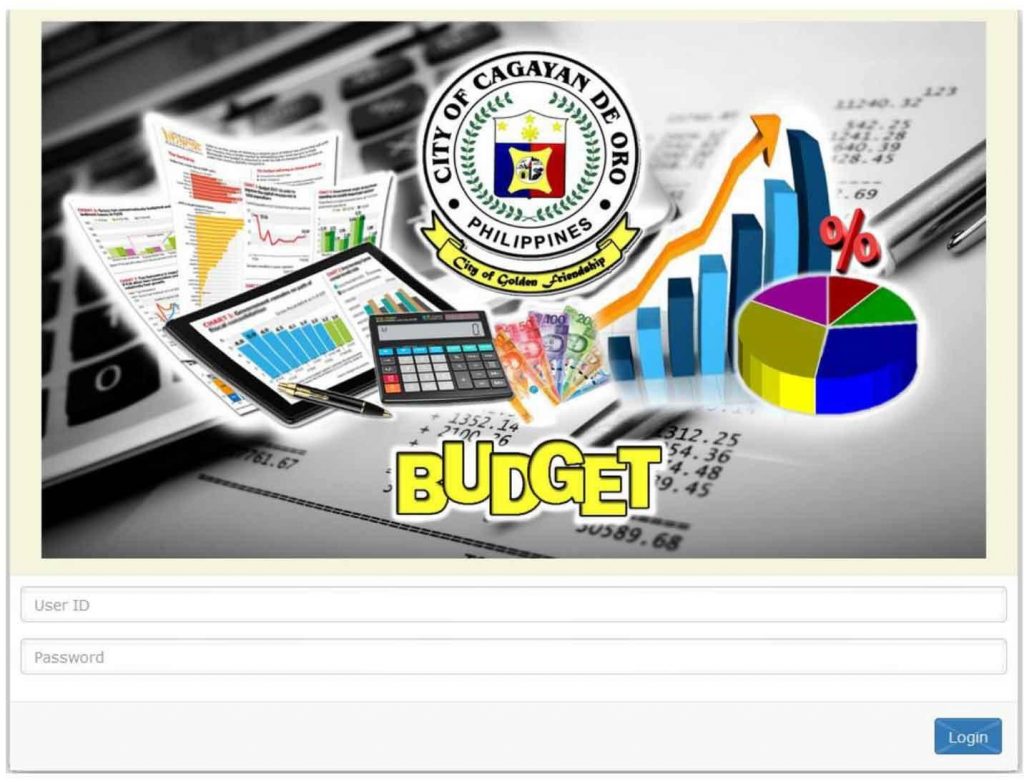
Screenshot of the Cagayan de Oro e-Budget System

Solution and Impact

The Budget Office initiated the e-Budget System through the support of the Management Information System Office. It provides a sustainable resource planning solution that is flexible, adaptable, and extensible. The first functional and operational release came out in July 2017, with the main processor of the Budget Office in charge of managing the data and establishing the protocols for accountability. It provides a sustainable resource planning solution that is flexible, adaptable, and extensible. Automating financial controls makes it easier to process transactions, manage records, and generate reports since data is kept in just one system. This results in properly monitoring expenditures from an obligation request to cheque issuance.

The system also serves as an end-to-end budget management tool for the preparation, proposal, authorization, appropriation, execution, request, release, and payment. Currently, budget proposals are centrally encoded by the Budget Office. However, they can be delegated to proponent offices for easier budget consolidation in the future. The Annual Investment Plan is also planned to be included in the next system development.

When it was first implemented, the system was met with resistance since some employees were not familiar with using the application or had not experienced using a computer before. This was addressed by the conduct of training and feedback sessions. The user’s needs were prioritized and eventually included in improving the system, making it far more efficient than the previous workflow.

Milestones

The e-Budget System was started in October 2016. The initial budget management module came out one year later, which can perform budget allocation, financial plan, release, and obligation requests. At that time, the obligation requests are created by the Budget Office. As a result, the Statement of Appropriations, Allotment, Obligations, and Balances (SAAOB) report can be generated within minutes.

To further devolve the process, all offices with budget allocations were given access to the system in January 2018. These offices can now view their budget balance online and prepare and print their obligation request form. The Budget Office will just have to validate the submitted obligation entries. In March of the same year, the Accounting Office was given access to perform the fund control function to revert the remaining balances to the concerned office’s budget in real-time. Another feature was added in October that enables tax deduction and reporting to applicable transactions and suppliers. Finally, in December of that year, the e-Budget System was integrated with the Treasury Management System, which displays the audited amount and makes it available for cheque preparation and quickly retrieves the cheque transaction list.

A new module was introduced in February 2019 to record employee cash advances. It automatically alerts concerned employees through SMS and email to liquidate their outstanding advances immediately. In July, the General Services Office was granted access to the system to generate disbursement vouchers to purchase or pay for capital assets, infrastructure, and diverse supplies for office, medical, and utility use.

Because of its expanded features, the CDO e-Budget System was awarded 2nd Best in the e-Gov Inter-Operability Empowerment Category of the 2019 Digital Governance Awards held on 26 November 2019 at the Philippine International Convention Center, which was organized by the Department of Information and Communications Technology (DICT), Department of the Interior and Local Government (DILG) and the National ICT Confederation of the Philippines.

In July 2020, all LGU offices and national government agencies with an allocated budget by the City Government were provided access to the budget preparation feature. Proponents can now encode their office’s budget proposals, making data consolidation much easier.

The e-Budget System will continue to improve in the future with additional features through the support of its development team and other offices. By 2025, their target is to establish a Comprehensive Financial Management System that can be used by the local government and its 80 component barangays.

Testimonials

“I am confident enough about the budget data because of the efficiency the system ensures.”

– Guiney Molawan, Administrative Aide II, City Finance Department, City Government of Cagayan de Oro.

“We get to monitor the status of our Obligation Request in real-time. Also, system assistance is provided promptly.”

– Junefay Sinomio, Administrative Officer IV, Human Resource Management Office, City Government of Cagayan de Oro.

“Monitoring our accounts is much easier. This improves our office’s strategic plans in ensuring that all our services are being delivered to our clients. Also, we can track the status of our obligation requests. The E-budget System was indeed a very helpful tool in our financial management. The automation made our job easier.”

– Clarita Tonido, Day Care Worker II, City Social Welfare and Development Office, City Government of Cagayan de Oro.

“e-Budget System makes everything easy. We can easily monitor the budget of different departments.”

– Ana Rowena Cagadas, Administrative Officer IV, City Budget Office, City Government of Cagayan de Oro.

Sources

Department of Information and Communications Technology. (2019, November 28). DICT, DILG, NICP award LGUs’ outstanding digital initiatives. Retrieved from: https://dict.gov.ph/dict-dilg-nicp-award-lgus-outstanding-digital-initiatives/

Orias, P.J. (2019, November 27). City Government bags two digital awards. SunStar. https://www.sunstar.com.ph/article/1833889/cagayan-de-oro/local-news/cagayan-de-oro-city-government-bags-2-digital-awards

iFM Cagayan de Oro. (2020, April 28). Breakdown sa nagasto sa CDO City Government kabahin sa COVID-19 measures. [Link with thumbnail attached] [Status update]. Facebook. https://www.facebook.com/99.1iFMCDO/posts/basi-ni-city-budget-officer-atty-percy-salazar-ao-kini-ang-breakdown-sa-nagasto-/3430151983733384/
Implementing Agency

Municipal Government of Magallanes, Cavite

Year Implemented

2011-Present

General Description

The Community-Based Monitoring System (CBMS) is a systematic way of acquiring, processing, and verifying necessary data which will be utilized in program preparation and implementation to address the challenges in poverty. Republic Act No. 11315 mandated that the technology-based system be introduced and launched in every city and municipality, serving as an instrument for alleviating poverty and sustaining the community’s needs. 

CBMS is also being used to address different challenges brought by the COVID-19 pandemic. Disaggregated socio-economic data generated from/through CBMS has proven valuable in identifying/targeting beneficiaries for disaster risk preparedness and response interventions. Despite the signing of the Community-Based Monitoring System Act last 17 April 2019, not all LGUs were able to establish their own CBMS, with some unable to complete their modules. Given their early adoption of CBMS in 2011, the Magallanes LGU has an advantage over other cities and municipalities in implementing modules that further improve data collection and management.

Background and Problem

With the need to have a standard, accurate, comprehensive, and consolidated system to efficiently provide services to its constituency, the fourth class municipality of Magallanes, Cavite, adopted CBMS in 2011, eight years prior to its being required by law beginning in 2019. CBMS is an organized, technology-based system of collecting, processing, and validating data that may be used for planning, program implementation, budgeting, vulnerability risk mapping, and impact monitoring. 

While the Philippine Statistics Authority has reported a significant decrease in poverty incidence, the past five years have seen a downward trend in the poverty incidence rate, from 25.2 percent in 2012 to 23.3 percent in 2015 to 16.6 percent in 2018. But when the COVID-19 pandemic arose, it worsened the poverty condition in the Philippines beginning in 2020. Poverty, hunger, and out-of-school youth are some of the country’s common problems, with a significant number of Filipinos unable to sustain their everyday basic needs. Lack of necessary data makes it difficult for LGUs to assist the vulnerable and respond to this pandemic. 

Managing the COVID-19 pandemic requires data to target eligible beneficiaries in times of disaster. A lack of data makes it difficult for a municipality to determine the causes of poverty, formulate appropriate policies and programs, and effectively and efficiently implement the programs of the government.

Solution and Impact

To address the challenges brought by the COVID-19 pandemic, the Magallanes LGU utilized the CBMS to target beneficiaries who urgently needed support and assistance. The planning group of the Disaster Risk Reduction and Management Incident Management Team (DRRM-IMT) used CBMS data tools to identify the eligible target beneficiaries, thus reducing the processing time of consolidating all the required information. Pertinent and useful data on beneficiaries was easily generated since the CBMS Technical Working Group (TWG) is also part of the DRRM-IMT. The CBMS has made it easier and faster for the Magallanes LGU to develop programs and effectively allocate resources during the pandemic. The successful implementation of the CBMS has led to the following results:

  • 2,984 Social Amelioration Program (SAP) beneficiaries
  • 650 SAClolo SACakulangan (SAC) Program beneficiaries 
  • 2,199 senior citizens received medicines and vitamins
  • 315 persons with disabilities received food packs
  • 242 pregnant women and 300 lactating women received financial assistance worth PHP 1,000
  • 44 tricycle drivers received financial aid worth PHP 4,000
  • 6,079 households received relief goods and seedlings
  • 365 distressed overseas Filipino workers (OFWs) received financial assistance from the Overseas Workers Welfare Administration (OWWA) worth PHP 10,000
  • 153 frontliners received hazard pay
  • Identified 7 OFWs and 25 LSIs for isolation
Screenshot of the Community-Based Monitoring System of Magallanes

Milestones

The municipality of Magallanes commenced the first implementation of CBMS in November 2011. A five-member technical working group did the data processing and mapping in the Municipal Planning and Development Office. Data collection was paper-based, and encoding had to be done individually. 

In 2013, Mayor Edwin V. Sisante and Municipal Planning and Development Coordinator Roilan R. Reyes were invited to present at the 9th CBMS National Conference the actual applications of CBMS for disaster risk reduction management and climate change adaptation in the municipality.

The second round of CBMS was implemented in 2016, using a tablet-based data collection scheme called the CBMS Scan and Portal, which is more cost-effective than paper-based data collection. It used QGIS for mapping purposes and Statsim Pro to generate tabulated data. This technology also uses GPS for the location of households, unlike in the first implementation of CBMS, where all households were digitized manually using Natural Resources Database (NRD) Pro. All data collected are kept, owned, and managed by one member of the technical staff in the municipality. All information about the respondent is confidential. The local government complies with the Data Privacy Law and ensures the security and protection of any data obtained, used, and stored. Data Validation at the barangay level was done to inform the locals of the survey result, verify the accuracy of the data, and identify the significant problems in the area. 

In 2018, Mayor Jasmin Angelli Maligaya-Bautista was invited to present how the Magallanes LGU met the challenges posed by disaster preparedness at the 14th CBMS National Conference. The following year, a third round of CBMS was implemented that continued the use of tablet-based data collection.

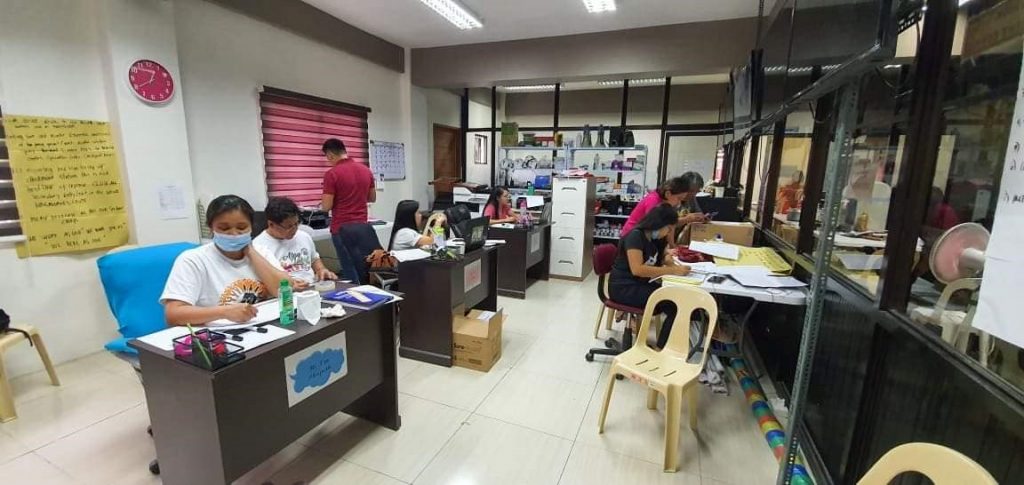
Local government employees of Magallanes during the COVID-19 pandemic.

In 2020, the Magallanes LGU won 2nd place in the Best in COVID-19 Pandemic Response at the Municipal Level category of the Digital Governance Awards. In September of the same year, the CBMS TWG accomplished the Barangay Validation for every barangays and prepared the Barangay Development Plan.

The CBMS has made some significant changes and developments since the local government of Magallanes first utilized it. LGU Magallanes was known as one of the best implementers in the whole Province of Cavite. Data has a significant role in planning so the Magallanes LGU formulated plans ahead of time because data is already available. CBMS data was used in different plans and programs of the municipality.

Testimonials

“Base po dun sa CBMS data, madali po namin na-locate yung mga taong ito. Madali naming nalaman kung saan sila pupuntahan. Wala pang isang oras inabot yung aming relief operation sa aming barangay.”

Mar Reduca, Barangay Captain, Barangay Urdaneta, Magallanes

“Sa panahon ng COVID-19, napakahalaga po ng tulong ng CBMS dahil ito po ang ginamit ng LGU upang matukoy ang mga individual, sambahayan o anumang sektor para sa pagbibigay ng tulong base sa kanilang pangangalilangan sa komunidad at sa kanilang pamiya. Isa na nga po sa mga programa na ibinaba noong COVID-19, during quarantine period ang SAP or Social Amelioration Program. Ito ay programa ng DSWD-National na lagi po siyang may timeline. Lagi po kailangan mai-submit ng madalian. Sa tulong ng CBMS, kami agad ay nakabuo ng masterlist at naisubmit agad namin sa DSWD Regional Office. Isa din pong naitulong ng CBMS ay yung paghanap din ng mga beneficiary ng SAClolo, natukoy din po agad ang mga beneficiary nito kung saan sila mahanap sa pamamagitan ng CBMS. Ganun din po ang programa ng LGU sa buntis at nanay na may anak na 0-24 months old. Madali pong matukoy kung saan silang barangay, sino sila, mga pangalan nila, edad, dahil po sa CBMS. At isa pa rin pong programa ng LGU kung saan ay pinagbasehan ang CBMS ay yung ating mga senior citizen na kung saan nagbigay ng tulong ang LGU ng vitamins sa ating mga PWD. 

Sa pamamagitan ng CBMS, ay madali po silang natukoy, per barangay kung ilan at saan sila. Isa par in po yung ating mga drivers, na binigyan din po ng financial assistance during community quarantine sa pamamagitan po ng TUPAD, natukoy din po agad sino yung mga drivers natin, ilan sila, kung saang barangay dahil din po sa CBMS. 

Ang CBMS ay napakalaking tulong at napakahalaga po ng kanyang bahagi o papel para sa pagpapatupad ng mga programa ng LGU at hindi na nahihirapan na maghanap paisa-isa sa barangay dahil nasa kanila na lahat. Isang pindot lang, lalabas na lahat ang mga pangalan, edad, saang barangay, kaya madaling maibaba o maibigay ang mga tulong sa bawat sektor or indibidwal at sambahayan na nangagailangan ng tulong.”

Ofelia Gio, Municipal Social Welfare and Development Officer, Magallanes

Sources

CMBS Network Team. (2019). Using CBMS data to inform localized COVID responses in the Philippines. Partnership for Economic Policy. https://www.pep-net.org/using-cbms-data-inform-localized-covid-responses-philippines 

Facebook. (2012, February 21). Community-Based Monitoring System – CBMS. Retrieved January 26, 2022, from https://www.facebook.com/CBMSNetwork/ 

JRILGG Secretariat. (2021, January 12). Empowerment through People and Data: Best Practices of LGU Magallanes in COVID-19 Response. Jesse Robredo Institute. https://jesserobredoinstitute.com/empowerment-through-people-and-data-best-practices-of-lgu-magallanes-in-covid-19-response/ 

Partnership for Economic Policy. (2014, September 3). CBMs Philippines. ABOUT CBMS-Philippines. Retrieved January 26, 2022, from https://www.pep-net.org/cbms-philippines 

Philippine Statistics Authority. (n.d.). Community-Based Monitoring System Act. https://psa.gov.ph/content/community-based-monitoring-system-act 

Philippine Statistics Authority. (2019, December 06). Proportion of Poor Filipinos in 2015 was 23.3 percent. https://psa.gov.ph/content/proportion-poor-filipinos-2015-was-233-percent 

Philippine Statistics Authority. (2019, December 06). Proportion of Poor Filipinos was estimated at 16.6% percent in 2018. https://psa.gov.ph/content/proportion-poor-filipinos-was-estimated-166-percent-2018 

Title of Productivity and Innovation Initiative:

Moncada eBPLO system

Implementing Agency:

Municipal Government of Moncada, Tarlac

Year Implemented:

2016-present

Theme/s:

Digitization & New Technologies, and Government of the Future

General Description

Pursuant to RA 11032 or the Ease of Doing Business and Delivery of Government Services (EODB/EDGS) Act, the Municipality’s Electronic Business Permits and Licensing Office (eBPLO) system of the Municipality of Moncada, Tarlac was implemented in 2016. Initially, it only aimed to streamline the process of business permits and license transactions in Moncada through an organized online database for all business records. As of 2021, the system has also integrated an Electronic Queuing System, Mayor’s Assistance System, Revised Automated Travel Pass System, and Human Resources Human Resources Information System (HRIS). It also serves as a database for other records such as real property taxes (RPT) and community tax certificates (CTC).

Background and Problems

Moncada is a first-class municipality in Tarlac, with over 57,000 residents according to the 2015 Census. Residents aged 15 to 64, which belong to the economically active population and actual or potential workforce members, constitute 62.25% of the municipality. In terms of trade and commerce, there are currently over 500 business establishments and 500 public market stalls.

Based on Moncada LGU’s data, before implementing the eBPLO system, the average assessment time of business-related documents would usually take at least two to four hours with manual processing. There are also instances of missing or misplaced physical records, which would result in transactions taking even longer. Municipal records show that before the eBPLO implementation, only about four to five transactions could be accommodated per day.

Solution and Impact

Moncada LGU partnered with ezGov, a company that specializes in the application and system development for various local governments in the country, in automating their eBPLO and records for RPT, engineering, and treasury, creating HRIS system for their resource management and queuing system for customer service, and developing their eMoncada and COVID Management Applications.

With the eBPLO system in place, the performance monitoring data of Moncada showed a significant improvement in the speed of transactions. From an average of two hours pre-implementation, the assessment time that the system recorded as of 2020 reduced to an average of 2.81 minutes. The average daily transactions also increased from only four to five to at least 90. These already notable leaps in productivity become even more impressive given other factors such as the fact that manual transactions often take even longer hours whenever the assessors fail to find the previous records of business owners.

Apart from improving the efficiency of transactions, the eBPLO system also constantly monitors delays and acts on them accordingly through a performance monitoring feature integrated into the queuing system, which records the length of time that the users spend lining up until they have accomplished all the processes. The resulting time saved has freed up the staff to focus on other important municipal tasks.

The shorter and almost hassle-free transactions have encouraged more people to register and start new businesses. Since 2016, 100 percent of business owners in Moncada have been registered in the system and all of the local government’s’s business processes go through it as well. From less than 30 large enterprises, the municipality of Moncada is now home to a total of 190 in 2020.

Milestones

In 2020, the eBPLO system won second place in the Digital Governance Awards (DGA) which was organized by the Department of Information and Communications Technology (DICT), through its ICT Industry Development Bureau (IIDB), in partnership with the Department of Interior and Local Government (DILG) and the National ICT Confederation of the Philippines (NICP). The DGA is an annual search for ICT best practices of local government units (LGUs) for more effective and efficient delivery of public services to their constituents and business stakeholders.

The Moncada LGU is currently planning to incorporate an online payment system to further increase the convenience for businesses in the municipality. The LGU also aims to integrate the system in their new eMoncada Application, which aims to serve as an all-in-one platform that features a local business directory and services such as contact tracing and a tracker for the vaccination status of residents.

A person using the eBPLO system

Screenshots of the eBPLO system user interface

References

Sigue, J. B. (2021). Digital Governance Awardees for 2020. Retrieved from https://jocellebatapasigue.com/2021/09/09/digital-governance-awardees-for-2020/

PhilAtlas. (n.d.). Moncada, province of Tarlac. PhilAtlas. Retrieved from https://www.philatlas.com/luzon/r03/tarlac/moncada.html 

Aquino, E. (2020). (rep.). Digital governance awards 2020 business empowerments (G2B) Moncada: Automated BPLO. Moncada, Philippines.

Mayor Rex Gatchalian of Valenzuela City, Philippines, shared the city’s integrated business permit application system with the participants of the online Trainers Training on Government Digital Services conducted by the Asian Productivity Organization (APO) and the Development Academy of the Philippines (DAP)  on November 26, 2020.

The Paspas Permit is a 10-second business permit application system that allows the issuance of provisionary business permits within ten seconds after confirmation of payment. Before this project, the issuance of business permits at the City Hall takes about 15 to 30 minutes.

The “Paspas Permit” accelerated Valenzuela’s digital technology adoption and streamlined services for more than 18,000 businesses in the city.

Mayor Rex said that “the platform demonstrates the local government’s commitment to making services more efficient and innovative, which in turn can attract more investors and spur further development. The system also integrates services of the Office of the Building Official, City Assessor’s Office, the Local Civil Registry, and the Treasurer’s Office.

The training attended by 27 participants from 10 APO member countries introduced digital services’ role in increasing the effectiveness and efficiency in meeting public needs and identifying the e-government systems that promote quality governance and innovation.

Mayor Trina Firmalo-Fabic of the Municipality of Odiongan, Romblon, talked about Leadership on Local Government Administration amidst COVID-19 Pandemic during the 2021 APO Course on Development of Public-Sector Productivity Specialists on March 5, 2021.

The local government responded immediately by creating the Municipal Task-Force on Emerging Infectious Diseases and implementing the Guidelines on Handling the COVID-19 pandemic. She also highlighted the establishment of the Municipal Contact Tracing Team and working with the Department of Science and Technology to utilize FASSSTER and COVIDKAYA for more efficient and fact-based contact tracing.

Mayor Firmalo-Fabic highlighted that the LGU provided COVID-19 updates consistently via live stream announcements on Facebook with simultaneous broadcasts on a local radio station and television channel and distributed flyers to make the citizens well-informed and assured that the LGU is working during the pandemic. Other initiatives include customized care packages for vulnerable sectors, a mobile lab for persons with disabilities and the elderly, a mobile library for children, psychological assistance, online consultations and prescriptions, and shuttle services for
front liners.

At the end of the presentation, Mayor Firmalo-Fabic emphasized that “during this pandemic, the local government learned to ensure a timely initial response, to mobilize the departments and the private sector towards a common goal, to treat the community equally and compassionately, to
maintain public trust through transparency and consistency, and to use creative solutions to transform challenges into opportunities.”